As summer temperatures rise so will people's thirst. Unfortunately, many people will grab a pop or iced tea instead of water. It isn't just cola's empty calories – about 150 per 12-ounce can – you should worry about. Many of these beverages harm enamel, the protective shell around teeth.
A pilot study of the effects some of these beverages had on enamel, appearing in the July/August 2004 issue of General Dentistry, the Academy of General Dentistry's (AGD) clinical, peer-reviewed journal, found that over time, exposing dental enamel to carbonated beverages and non-carbonated canned iced tea weakens and permanently destroys enamel.
Results from the study, which exposed healthy dental enamel to a variety of popular beverages over a period of 14 days, found that non-colas and canned iced tea were especially harmful. They contain flavor additives, such as malic, tartaric and other organic acids, which are more aggressive at eroding teeth. Root beer, which contains the least amount of flavor additives, was found to be the "safest soft drink to safeguard dental enamel."
About 27 percent of the beverages consumed by Americans are soft drinks, the study notes. Overall soft drink consumption has steadily increased over the years and remains on the rise, contributing to an increase in oral health problems, namely cavities. In 1977, 12- to 19-year-olds drank 16 ounces of soda a day. In 1996, this same age group consumed an average of 28 ounces a day.
Soda consumption has increased from approximately 20 gallons per person per year in 1970 to more than 50 gallons per person per year in 2004. The American Beverage Association has stated that soft drinks account for 28 percent of overall beverage consumption.
Soft drinks and canned beverages are constant features of daily life, and the approximately $50 billion the industry rakes in each year suggests it won't go away anytime soon. However, soda can be enjoyed in limited quantities. J. Anthony von Fraunhofer, MS, PhD, FADM, FRSC, lead author of the study, says that soda consumed "at meal times is less injurious than when consumed alone and continuous sipping is more harmful than the whole drink taken at one time."
According to AGD spokesperson Cynthia Sherwood, DDS, soda's combination of sugar and acidity can be damaging to teeth. Though the level of risk varies from person to person, Dr. Sherwood says, "Repeated exposure of soda through sipping over a long period of time increases the risk of getting a cavity."
Dr. Sherwood adds that drinking soda through a straw may help reduce the amount of soda that comes into direct contact with the teeth. She also recommends that soda drinkers rinse their mouths out with water after drinking and use toothpaste that contains fluoride.
Fact:
A typical 12-once can of regular soda contains approximately 10 teaspoons of sugar.
February 2007 InfoBites Academy of General Dentistry
Showing posts with label Simi Valley. Show all posts
Showing posts with label Simi Valley. Show all posts
Friday, June 25, 2010


Friday, January 15, 2010
FAQ about my Uganda trip (part 1)
So, only 5 weeks left before I leave for Uganda, Africa. The purpose - to provide missionary dentistry to people in the African bush.
How long is the flight? Total time in the airplanes will be about 19 hours.
How long will you be gone? 2 weeks
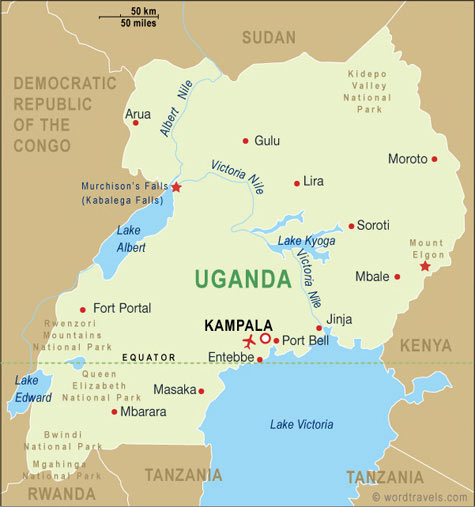
Where is Uganda?! It is in Africa, on the eastern side (click here to see a map) Africa Map
Where in Uganda will you be going? We are flying into Entebbe which is near the capital city of Kampala. From there, we will be going away from the city into the bush areas. Uganda Map
What will the weather be like? Entebbe is on the equator so I'm expecting it to be hot! Although, from what I've read, temperatures during Feb / March will be on average around 78 degrees but will have at least 80% humidity. So it will be nice and sticky. Just what a curly haired girl wants to hear....
Stay tuned for more info.
How long is the flight? Total time in the airplanes will be about 19 hours.
How long will you be gone? 2 weeks
Where is Uganda?! It is in Africa, on the eastern side (click here to see a map) Africa Map
Where in Uganda will you be going? We are flying into Entebbe which is near the capital city of Kampala. From there, we will be going away from the city into the bush areas. Uganda Map
What will the weather be like? Entebbe is on the equator so I'm expecting it to be hot! Although, from what I've read, temperatures during Feb / March will be on average around 78 degrees but will have at least 80% humidity. So it will be nice and sticky. Just what a curly haired girl wants to hear....
Stay tuned for more info.
Tuesday, December 29, 2009
The 3 R's of Expiring Medication
Two-thirds of American's medicine cabinets contain medications that have expired or are nearly empty, according to a recent study. The survey found that while 80% of respondents clean out their refrigerators when the seasons change, and 55% clean out their closets, only 42% give their medicine cabinets the same treatment.
Take time to prepare for the season by stocking up on pharmaceuticals to combat colds and allergies, as well as chucking out old medications that may have lost their effectiveness.
1.) Read labels and expiration dates
2.) Remove what's past its usefulness of effectiveness
3.) Restock with appropriate preparations
Medications, generally, should be stored in a dry place away from sunlight. Bathrooms are often too damp and humid, which can break down, degrade or decrease the potency.
Take time to prepare for the season by stocking up on pharmaceuticals to combat colds and allergies, as well as chucking out old medications that may have lost their effectiveness.
1.) Read labels and expiration dates
2.) Remove what's past its usefulness of effectiveness
3.) Restock with appropriate preparations
Medications, generally, should be stored in a dry place away from sunlight. Bathrooms are often too damp and humid, which can break down, degrade or decrease the potency.
Subscribe to:
Posts (Atom)